
Part of our house wash & exterior services in Auckland.
Most people think cleaning the outside of a house means blasting it with a water blaster. On a lot of surfaces that's the wrong tool. High pressure can lift paint, gouge timber, crack plaster and force water up behind the cladding where it does real damage.
Soft washing gets the same result, or better, without any of that.
How soft washing works
- Protect. We wet down and cover plants, and close up anything that needs it.
- Apply. A biodegradable cleaning solution goes on at low pressure.
- Wait. It sits long enough to kill the mould, algae and lichen and loosen the grime.
- Rinse. Everything gets rinsed off gently, top to bottom.
Because the growth is killed, not just knocked off, it takes longer to come back.
Surfaces that need a soft wash
- Painted weatherboards, timber or fibre-cement
- Plaster and texture-coated cladding, including monolithic homes
- Linea and other board cladding
- Roofs, especially painted iron and concrete tiles
- Glass, joinery and outdoor furniture
- Newer concrete, roughly under three years old
When a water blaster is the right tool
Hard, tough surfaces like older concrete driveways, paths and pavers can take more pressure, and sometimes need it to lift oil and ground-in dirt. That's a pressure wash job. We'll tell you which method suits each part of your property when we quote.
Want a price? It's free and there's no obligation.
Where we soft wash
Homes, units and commercial buildings across Auckland. For homes, book it as a house wash. For roofs, see roof cleaning. For shops, offices and body corporates, see commercial building washing.
Soft wash questions
What is soft washing?
Soft washing uses low water pressure and a cleaning solution to kill mould, algae and lichen, rather than relying on force to blast it off. The solution is mixed with water before it goes on, and we swap nozzles to suit the surface. Because it kills the growth instead of just stripping the top layer, the house stays cleaner for longer.
What's the difference between soft washing and water blasting?
Water blasting uses high pressure to strip grime off hard surfaces like concrete and brick. Soft washing uses low pressure and lets the solution do the work, so it's safe on paint, plaster, timber, glass and vinyl. On most jobs we use both, matched to each surface.
Which surfaces need a soft wash rather than a water blaster?
Painted weatherboards, plaster and Linea-type cladding, timber, windows, joinery and outdoor furniture. Concrete less than three years old should only be soft washed too, because high pressure can damage it. If you're not sure what you've got, we'll tell you when we look at the job.
Will the soft wash solution hurt my garden?
We use a biodegradable solution, and it's watered down before it's sprayed. Plants close to the house get covered or protected before we start, and we rinse down when we're finished.
My timber deck is green and slippery. Can you soft wash it?
Yes. We spray the deck with the right solution and leave it to kill the algae, so it can be cleaned off without gouging the timber the way a water blaster can. Auckland decks under trees go green fast over autumn and winter, so it's worth getting done before summer.
How often does an Auckland home need soft washing?
It depends on how much sun your place gets. Auckland's humidity turns south walls, fences and shady decks green quickly, so some homes want a wash every year while sunny ones can go a couple of years. We'll give you an honest call on what yours needs.
Related services
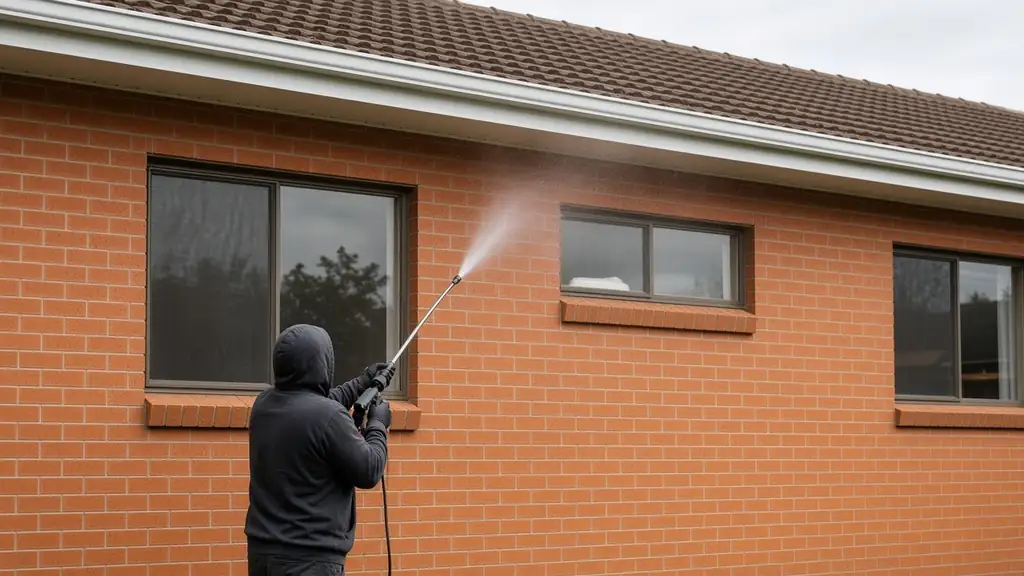 House wash AucklandMould and grime off the walls, eaves and joinery. Low pressure, no damage.
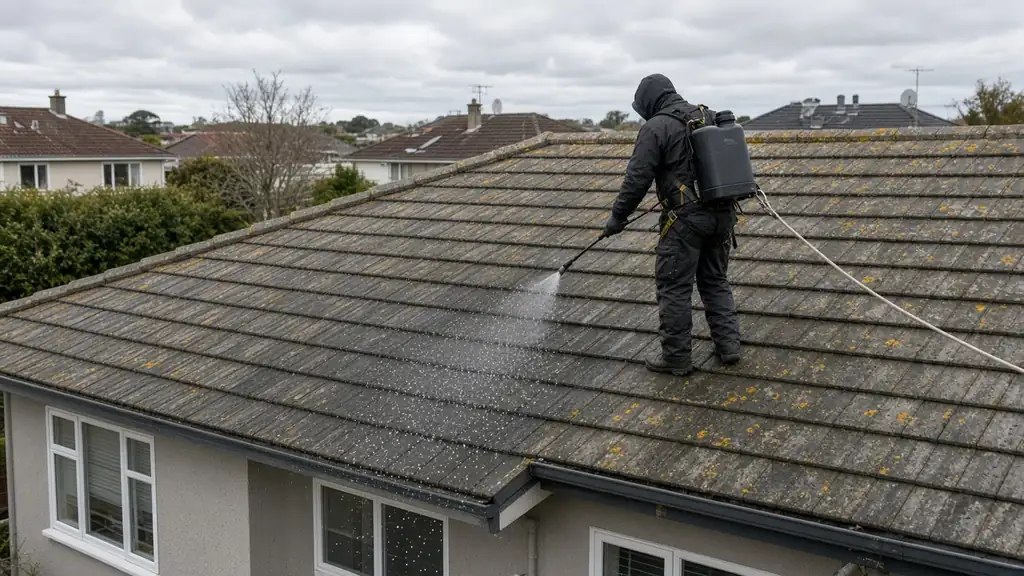 Roof cleaning AucklandMoss, lichen and mould washed off metal and tile roofs, including pre-paint washes.
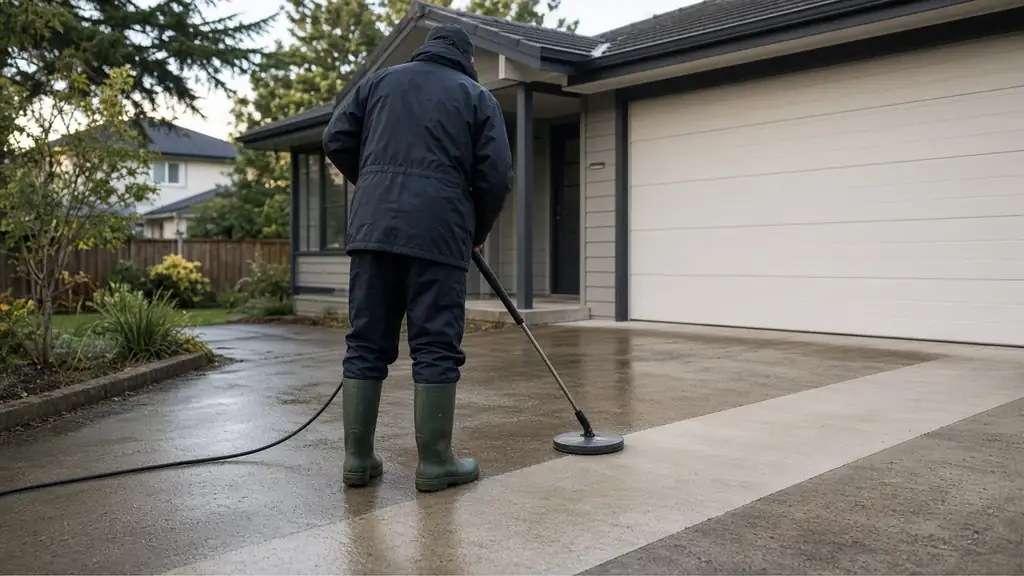 Pressure washing AucklandDriveways, paths and patios blasted clean of moss, grime and oil.
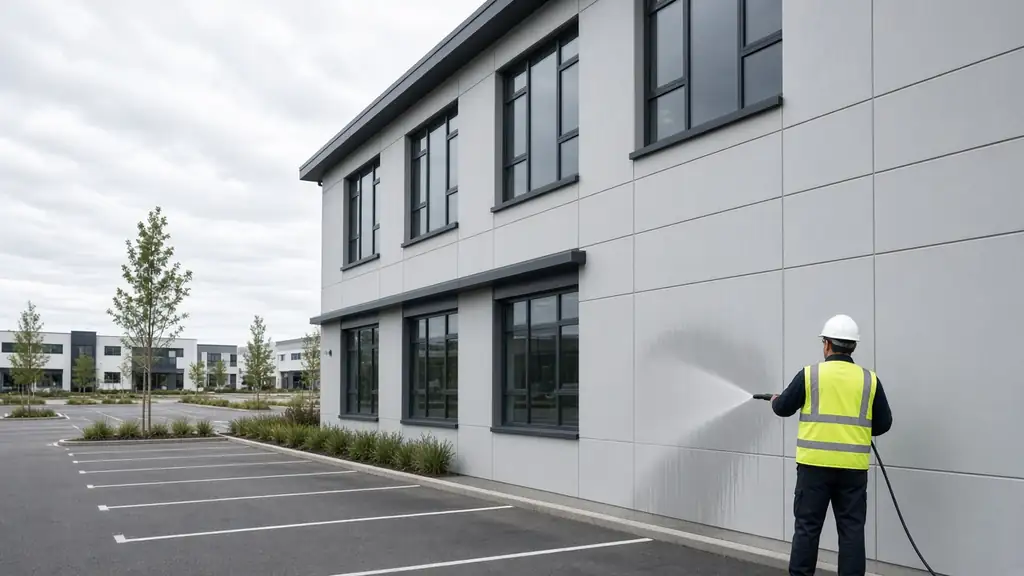 Commercial building wash AucklandExterior washing for Auckland shops, offices, warehouses and body corporates.