
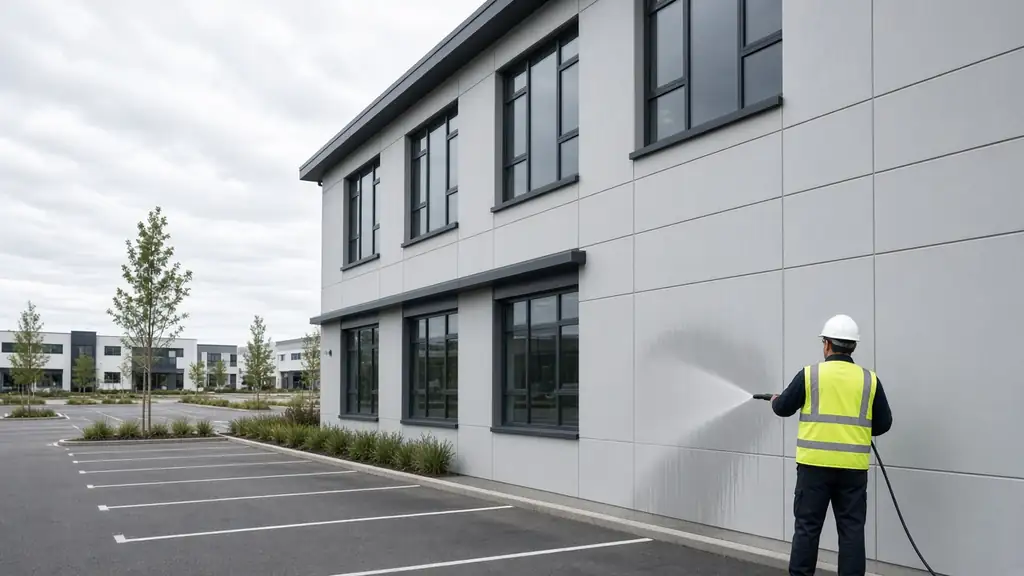
Most commercial buildings in Wellington need an exterior wash about once a year. Some need it more often. A shopfront on a busy street or an apartment block facing the harbour won't look the same after twelve months as an office tucked away on a quiet back street.
Here's how to set the right schedule for your building, what happens when you let it slide, and how we fit the work around the people using it.
Once a year is the starting point
An annual wash suits most offices, retail buildings, warehouses and body corporate sites. It keeps grime, mould and salt from building up to the point where they start damaging finishes.
From there, adjust for your building:
- Shopfronts and street-level retail: often more frequent, because the bottom few metres take the most dirt and the most eyes
- Coastal and harbour-facing buildings: salt builds up fast on the windward side
- Buildings near busy roads: traffic grime and exhaust soot stick to every ledge
- Shaded or south-facing walls: mould and algae grow faster
- Sheltered, inland buildings: you may be able to stretch it a little
We can set up a schedule that suits your building rather than a one-size plan.
What Wellington weather does to a building
The wind is relentless. It carries dust, grit and salt and drives it into joinery, ledges and textured cladding. Rain then washes some of it down in streaks, often right below windows and parapets.
Damp winters and shaded laneways help mould and algae take hold, especially on plaster and painted surfaces. Pigeons and gulls add their own mess around ledges and signage.
Left alone, all of this does more than look bad.
What it costs to leave it
Faster wear on finishes
Grime and growth hold moisture against cladding and paint. Salt attracts water and attacks metal. Over time, coatings break down sooner and you're looking at a repaint or repairs years earlier than planned.
Warranty risk
Many cladding, roofing and joinery manufacturers set out maintenance requirements, and regular washing is often part of it. If something fails and there's no maintenance record, a warranty claim can get harder. Check what your building's products require.
First impressions
Tenants, customers and visitors notice. A grubby entrance or streaked frontage makes a business look tired, and it can affect how easy a space is to lease.
Bigger jobs later
A building washed every year is a quicker, simpler job. One left for five years can need heavier cleaning and more time on site, which costs more and disrupts more.
Working around your tenants
This is the part property managers ask about most. Nobody wants a wash crew blocking the front door at lunchtime.
When we plan a commercial job, we:
- Talk through trading hours, deliveries and any busy times to avoid
- Give you notice before each visit so you can let tenants know
- Work in sections so entrances stay usable
- Protect signage, plants and anything sensitive around the site
- Leave the area tidy at the end of each day
How we wash commercial buildings
Different parts of a building need different methods. Plaster, painted surfaces and cladding get a soft wash with a solution that kills mould and algae. Hard surfaces like concrete forecourts, paths and car parks get pressure washed. Some jobs need a combination of methods to get the best result.
If you want the windows done on the same visit, ask us.
Full details are on our commercial building wash Wellington page. For forecourts and car parks, see our pressure washing in Wellington page.
Don't forget the gutters
Commercial roofs often have long gutter runs and internal gutters that block without anyone noticing until water comes through a ceiling. Adding a gutter clean in Wellington to your annual wash is an easy way to stay ahead of it.
Getting a quote
Every building is different, so we quote after a site visit. Quotes are free. Call us on 027 303 8398 or email sales@classiccleaners.co.nz. We're open seven days, 7am to 7pm.
Commercial building wash questions
How often should a commercial building be washed?
About once a year for most buildings. Coastal, street-front and busy-road sites may need it more often.
Can you work without disrupting our business?
We plan around your trading hours, work in sections and give notice before each visit, so entrances stay open.
Will washing damage our cladding or signage?
No. We soft wash painted and plastered surfaces at low pressure and protect signage while we work.